

rvly.over-blog.com/
14 Février 2021

OpenVAS is a full-featured vulnerability scanner. Its capabilitiesinclude unauthenticated testing, authenticated testing, various highlevel and low level Internet and industrial protocols, performance tuningfor large-scale scans and a powerful internal programming languageto implement any type of vulnerability test.
The scanner is accompanied by a vulnerability tests feedwith a long history and daily updates. ThisGreenbone Community Feedincludes more than 50,000 vulnerability tests.
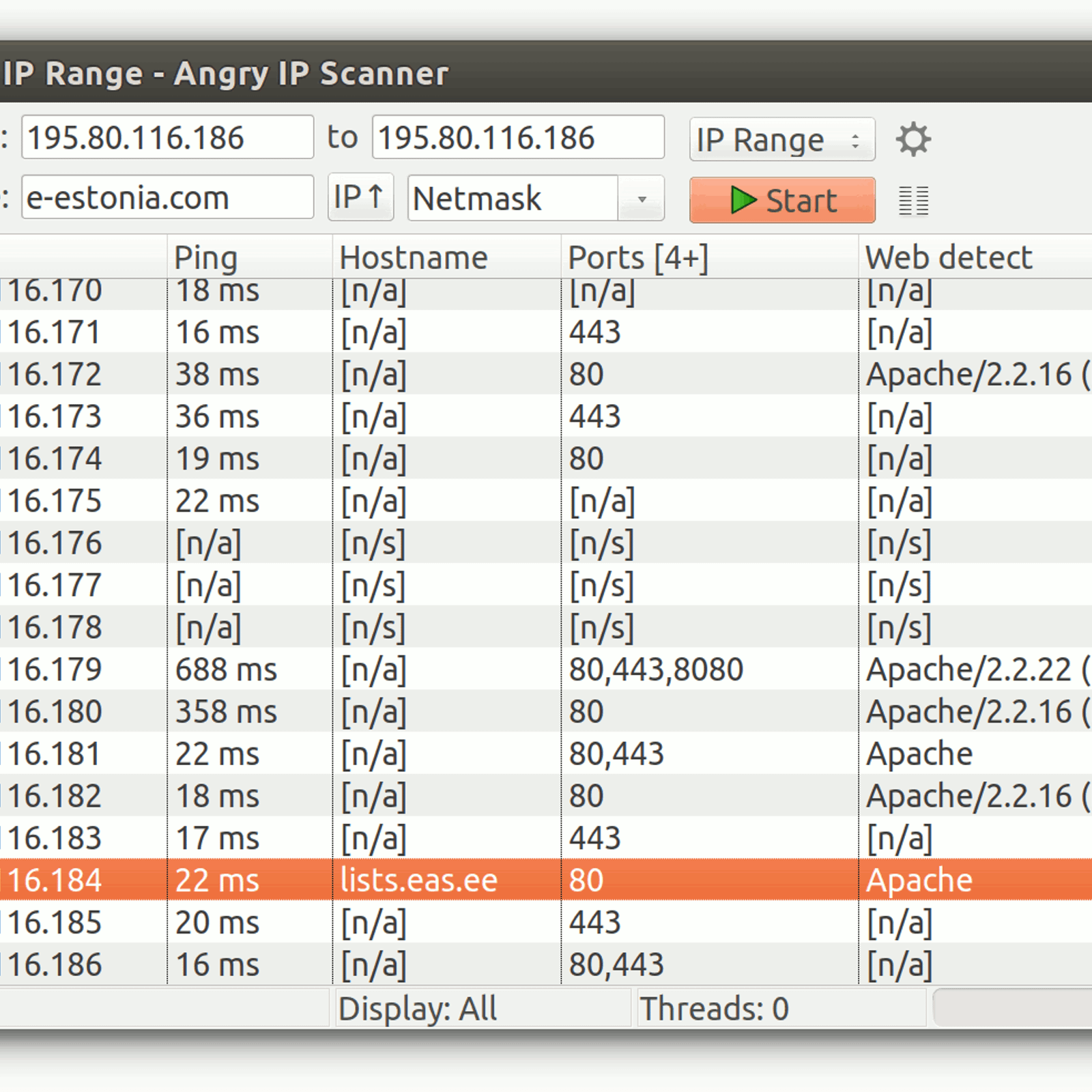
Super nice scanning software, saved me from buying a new scanner. Fujitsu refuses to support my old - still perfectly working - scanner on Mac OS Catalina, but VueScan brought it back to life. It even offers more settings and is much faster than the original software. Thank you so much, Hamrick Software, you made my day! See review on Facebook. Angry IP Scanner. Angry IP Scanner is an open-source and cross-platform network scanner designed to be fast and simple to use. It scans IP addresses and ports as well as has many other features. (GPL) Linux - Windows - MAC OS X.
The scanner is developed and maintained byGreenbone Networkssince 2009. The works are contributed as Open Source to the communityunder the GNU General Public License (GNU GPL).
Can i play ipad apps on my macbook. Greenbone develops OpenVAS as part of their commercial vulnerability managementproduct family 'Greenbone Security Manager' (GSM). Microsoft digital media pro keyboard 1031 driver for mac. OpenVAS is one element in alarger architecture. In combination with additional Open Source modules, it forms theGreenbone Vulnerability Managementsolution.Based on this, the GSM appliances use a more extensive feed covering enterprise needs, a GVM with additionalfeatures, appliance management and a service level agreement.
In 2005, the developers of the vulnerability scanner Nessus decidedto discontinue the work under Open Source licenses and switch toa proprietary business model.
At this point, developers from Intevationand DN-Systems (the two companies which would later found Greenbone Networks)already contributeddevelopments to Nessus, focussing on client tools. The works were primarily supportedby the German Federal Office for Information Security (BSI) In 2006, several forks of Nessus were created as a reaction to the discontinuation of the Open Source solution.Of these forks, only one continued to show activity: OpenVAS, the Open Vulnerability Assessment System.OpenVAS was registered as a project at Software in the Public Interest, Inc.to hold and protect the domain 'openvas.org'. |
The years 2006 and 2007 had little activity beyond clean-ups of the status quo.But in late 2008, the company Greenbone Networks GmbH,based in Osnabrück, Germany was founded to push forward OpenVAS.Essentially, Greenbone's business plan was about 3 cornerstones:
|
Also in 2008, two further companies became active, Secpodfrom India and Security Space from Canada.Both of them had a focus on contributing vulnerability tests, and teamed upwith Greenbone to start producing a reliable and up-to-date feed of vulnerability tests.This started with removing any source code and vulnerability tests where the licensewas not clear or not compatible. Several thousands of vulnerability testswere eliminated for a clean starting point. Shortly after this, the feed contentwas growing quickly and steadily. |
In 2009, Greenbone added the first additional modules to build a vulnerability management solution.The web interface and the central management service were developed from scratch, defining genericprotocols as their API.At the same time, the OpenVAS scanner was carefully improved, and quickly lost compatibilitywith its ancestor. All the Open Sourceworks were published under the brand 'OpenVAS'. The first 'Greenbone Security Manager'appliance products entered the market in the spring of 2010. Best apple computer for coding.
In the years 2010 to 2016, the commercial product was systematically improved and extended,and so were the Open Source modules as well. The vulnerability management was extendedto carry daily updated security advisories, contributed to the public with a GPL-compatible licensefrom German CERTs DFN-CERT and CERT-Bund,a division at the Federal Office for Information Security (BSI)who supported OpenVAS in various ways over these years. |
In March 2017, the so-called OpenVAS framework reached version 9. Many new modules and numerousfeatures were added during the release cycles. Some hundred thousands lines of code were producedand there was almost no day without a couple of published code improvements by a growing developer team. Video software for pc.
The year 2017 marked the beginning of a new era: First of all, Greenbone became visible as thedriving force behind OpenVAS, reducing the brand confusion. This includedseveral activities, the most essential one the renaming of the 'OpenVAS framework' to'Greenbone Vulnerability Management' (GVM), of which the OpenVAS Scanner is one of many modules.It also lead to 'GVM-10' as the successor of 'OpenVAS-9'. No license changes happened, all modules remainedOpen Source.
The second big change in 2017 was about the feed service. Apart from the branding confusion, severalcompanies were integrating the technology and feed and passing it off as their workor claiming to be an alternative to Greenbone's productat a better price. Only a minority of them properly complied with the GPL licenses. None of them cooperates withGreenbone commercially. Apple app store excel. For achieving better visibility, less misunderstanding andbetter distinction from other OpenVAS-based products, the public feed was renamed to 'Greenbone Community Feed'and the feed development was internalized. Furthermore, the release scheme changed from a14-days delay to a daily publication without delay where now vulnerability tests for enterprise products arenot included anymore.
The third big change towards the new era was the transition to a modern infrastructure, namely GitHub anda community forum. The whole transition was completed in 2018 and boosted both productivity and community activity.
In 2019 the branding separation was completed. OpenVAS now represents the actual vulnerability scanner asit did originally and the 'S' in 'OpenVAS' now stands for 'Scanner' rather than 'System'.These changes are accompanied by an updated OpenVAS logo.The framework where OpenVAS is embedded is the Greenbone Vulnerability Management (GVM).
OpenVAS released with GVM-10 receives numerous performance optimization to address thechallenge of a growing number of vulnerability tests, scanning target networks of increasing size andheterogeneity.
OpenVAS released with GVM-11 introduces substantial architectural changes: The former service 'openvassd' is turnedinto a command line tool 'openvas'. It is controlled by the service layerospd-openvas. This concept essentially replacesthe old stateful, permanent and proprietry OTP (OpenVAS Transfer Protocol) by the new state-less,request-response XML-based and generic OSP (Open Scanner Protocol).
Technical questions, coordination, user and developer discussions, questions and answersand announcements:Community Forum.
If you encounter problems with our infrastructure, have legal questions etc,then please contact:gse@greenbone.net.
For professional setups seeEnterprise Solution
You found a security issue in one of our software modules, products or services?We want to fix it! Please inform our Security Response Team viasecurity@greenbone.net.
More details on the Security Response Team and past Security Advisories:
As the number of Wi-Fi networks rapidly explodes, detecting, managing, and maintaining your Wi-Fi can become problematic. When everyone around you is blasting their own Wi-Fi signals—particularly if in large apartment buildings or business complexes with lots of other large companies—you're more likely to experience problems with Wi-Fi signals dropping out, poor connectivity, and slow performance.
Even within your own Wi-Fi network, several optimizations could help ensure your network is functioning appropriately, including router placement, appropriate channel, and security measures. And of course, analyzing and understanding your wireless network is key.
One of my favorite tools for discovering and solving these problems is SolarWinds® Network Performance Monitor (NPM). It includes high-performance network monitoring and insights and troubleshooting features to ensure your network starts working again as soon as possible after a problem arises. In particular, the SolarWinds heat map feature allows you to see where Wi-Fi signal is strong, and 'dead zones' with low connectivity.
Most Wi-Fi network analyzers work in a similar way, in which you can choose a wireless spectrum to examine, such as 2.4GHz or 5GHz. The analyzer then examines that spectrum to view networks, their channels, and signal strength.
In simple terms, a Wi-Fi analyzer gathers information about access points and channels on your network and displays it in an easy-to-understand, visually accessible way. A wireless network analyzer can help you maintain connection quality, which can be vital for numerous business needs and performance metrics. Wi-Fi signals are constantly changing, and small changes in the network can have massive effects on the overall connection uptime.
Using a Wi-Fi network analyzer can collect data and help you identify problems, or it can indicate potential solutions such as switching to another channel to reduce congestion. You can also use this type of tool to discover areas in your facility with a weak Wi-Fi signal.
In my opinion, using Wi-Fi analyzer software can be an excellent tool for optimizing business and even at-home Wi-Fi performance. This kind of software is usually easy-to-use and can provide great benefits in terms of connection reliability, signal strength, and download speeds.
Of the different tools available on the market, the SolarWinds Network Performance Monitor, with its Wi-Fi analyzer, is the most comprehensive. Despite its extensive list of features, it remains simple for both beginner and advanced users.
The relevant feature here is the heatmapping capability allowing you to create multiple color-coded maps of your facilities using real device data to display signal strength. You can automatically update these maps for a real-time understanding of your wireless network. Having at-a-glance insights into your Wi-Fi can really help with troubleshooting (especially when end users come knocking with complaints about connectivity).
Beyond heatmapping, NPM offers a range of useful network management features. For instance, its proprietary NetPath™ tool lets you detect and display network pathways with a visual traceroute. This allows you to simply determine where slowdowns and issues exist, as you can see the performance and information between individual nodes. Furthermore, with the PerfStack™ feature, you can compare the performance of different metrics side-by-side, so you can correlate multiple types of data across a common timeline.
Overall, SolarWinds NPM has an impressive suite of tools, and each has clean and beautiful visualizations and displays. Furthermore, NPM scales well and includes the ability to hook in with the SolarWinds High Availability platform, to ensure even fewer network drops, with strong failover protection.
NetSpot has a beautiful, easy-to-use interface, and is suitable for both beginners and experienced network administrators. It uses two different modes: discovery mode and survey mode. The first mode looks at a snapshot of the Wi-Fi networks near you, while survey mode can provide more detailed heat maps of Wi-Fi strength.
NetSpot is easy to install and includes several other visual representations of the wireless spectrum and the data it can collect. There are four different versions: free, home, commercial, and enterprise. The difference between them is the number of zones you can look at, how many access points you can scan, and the number of data points you can collect with a scan.
Another product to consider is InSSIDer. This established Wi-Fi analyzer tool for Windows is very reliable. The InSSIDer tool is generally intended for enterprise and business use, rather than for home users. Despite being geared toward admins, it's still relatively easy to use.
It gathers the data you would expect: channel, signal strength, MAC addresses, and encryption type for each access point on the network. InSSIDer then provides you with a 'link score' for each connection. The higher the score, the better. The software is easy to install, with comprehensive guides and links to free webinars if you need more assistance.
Consider NetCut if you're looking for a solution for professional or enterprise use. It was originally created to be a back-end solution, but it can be used by anyone for network investigating and debugging.
Free scratchcard games. NetCut allows you to monitor LAN activity and can display all the IP and MAC addresses and data of devices that are connected or have ever connected to your network.
With NetCut, you can kick someone off your network or restore their access at will. The main issue with NetCut for beginner users is that it has a lot of machine-translated documentation that may be hard to understand for someone who is not a network administrator, and a slightly more complex interface.
NetCut includes an extra layer of protection called NetCut Defender, which protects your computer from ARP and MAC address spoofing.
Unlike NetSpot and NetCut, WiFi Analyzer is intended primarily for home or temporary use. It is an app for Windows 10, available on the Microsoft Store. It comes in basic and pro versions, and the basic version includes everything you need to analyze your Wi-Fi network. The app takes your network and turns the data into easy-to-understand visualizations, suggesting which channel you should use to reduce congestion.
For someone new to Wi-Fi analyzer tools, this would be a potential choice. For enterprise needs or larger networks, it's probably much too limited.
Like most other Wi-Fi analyzers, Vistumbler scans nearby networks for access points and can map your Wi-Fi network and connectivity strength while showing you detailed information about each network. It provides network status, MAC address, SSID, signal strength, channel number, and network type.
Vistumbler is set apart by its GPS support, which can integrate with Google Earth to display Wi-Fi networks. This feature is for people who may be driving, walking, or cycling around to try to find Wi-Fi networks to use. When Vistumbler discovers a Wi-Fi network with this feature, the app can show you where the network is on a map and other network information.
The main downside is that Vistumbler is not easy to use, and the user interface can be difficult to navigate. Again, it's not a full enterprise solution for Wi-Fi analysis.
With good-looking graphics and sophisticated UI, WiFi Commander is one of the more attractive Wi-Fi analyzer tools. You can scan and filter nearby Wi-Fi networks and create 3-D graphs of the results. If your laptop has touchscreen capabilities, you can use touch to move and interact with the 3-D visualization.
The WiFi Commander app shows Wi-Fi signal strength and displays it in real-time so you can use the most recent data to join the strongest or most stable Wi-Fi network.
If you need a free or open-source Wi-Fi analyzer tool, check out Wireshark. Its purpose is to analyze and troubleshoot different communications protocols, and it includes the ability to look at Wi-Fi. Wireshark is very complicated to use, and you'll need some training to use it. As such, it's normally only used by networking and Wi-Fi professionals. In addition, there are obvious disadvantages for relying on open-source tools for business use, so you may want something with a bit more built-up functionality.
If you're looking for something a little more basic when it comes to Wireshark, SolarWinds has a free tool called Response Time Viewer for Wireshark designed to help you analyze packet capture files as well as visualize response time in Wireshark.
In general, there's no shortage of tools and software to help you monitor and organize your Wi-Fi networks, whether you're a casual user or an enterprise professional. With the inclusion of high-reward tools such as heatmaps, visualizations, and performance metric graphs, the best Wi-Fi analysis tools and network management tools can revolutionize how you get the most out of your connection.
I recommend SolarWinds NPM due to its more robust suite of offerings and simple learning curve for new users. It's much more robust than some of the limited-scope tools I mentioned above. Even so, I find the SolarWinds platform both intuitive and efficient.
Related Reading
How to Tame—and Redefine—Your Network Now – If you're interested in considering how networks are changing and evolving, as well as the ways in which you may need to adapt your network management, read this article on how to prepare for tomorrow's network topography.
Notice: MediaWiki has been updated. Report any rough edges to marcan@marcan.st
Welcome to the OpenKinect project
| Language: | English • español • suomi • français • italiano • português do Brasil • 中文(简体) |
|---|
OpenKinect is an open community of people interested in making use of the amazing Xbox Kinect hardware with our PCs and other devices. We are working on free, open source libraries that will enable the Kinect to be used with Windows, Linux, and Mac.
The OpenKinect community consists of over 2000 members contributing their time and code to the Project. Our members have joined this Project with the mission of creating the best possible suite of applications for the Kinect. OpenKinect is a true 'open source' community!

Our primary focus is currently the libfreenect software. Code contributed to OpenKinect where possible is made available under an Apache20 or optional GPL2 license.
If you want to participate or just watch the progress of the OpenKinect effort, subscribe to the OpenKinect mailing list. In the application form, please tell us something about yourself and you'll be approved automatically. You could also subscribe to the low-traffic announcement-only mailing list.
OpenNI
Tech


/image%2F6235565%2F20210327%2Fob_b0536c_apple-watch-won-t-unlock.jpeg)
/image%2F6235565%2F20210327%2Fob_e2aab2_putting-microsoft-office-on-macbook.jpeg)
/image%2F6235565%2F20210327%2Fob_61cd9d_apple-update-windows-7.jpeg)
/image%2F6235565%2F20210327%2Fob_aa24d6_microsoft-office-for-macbook-pro-free.jpeg)